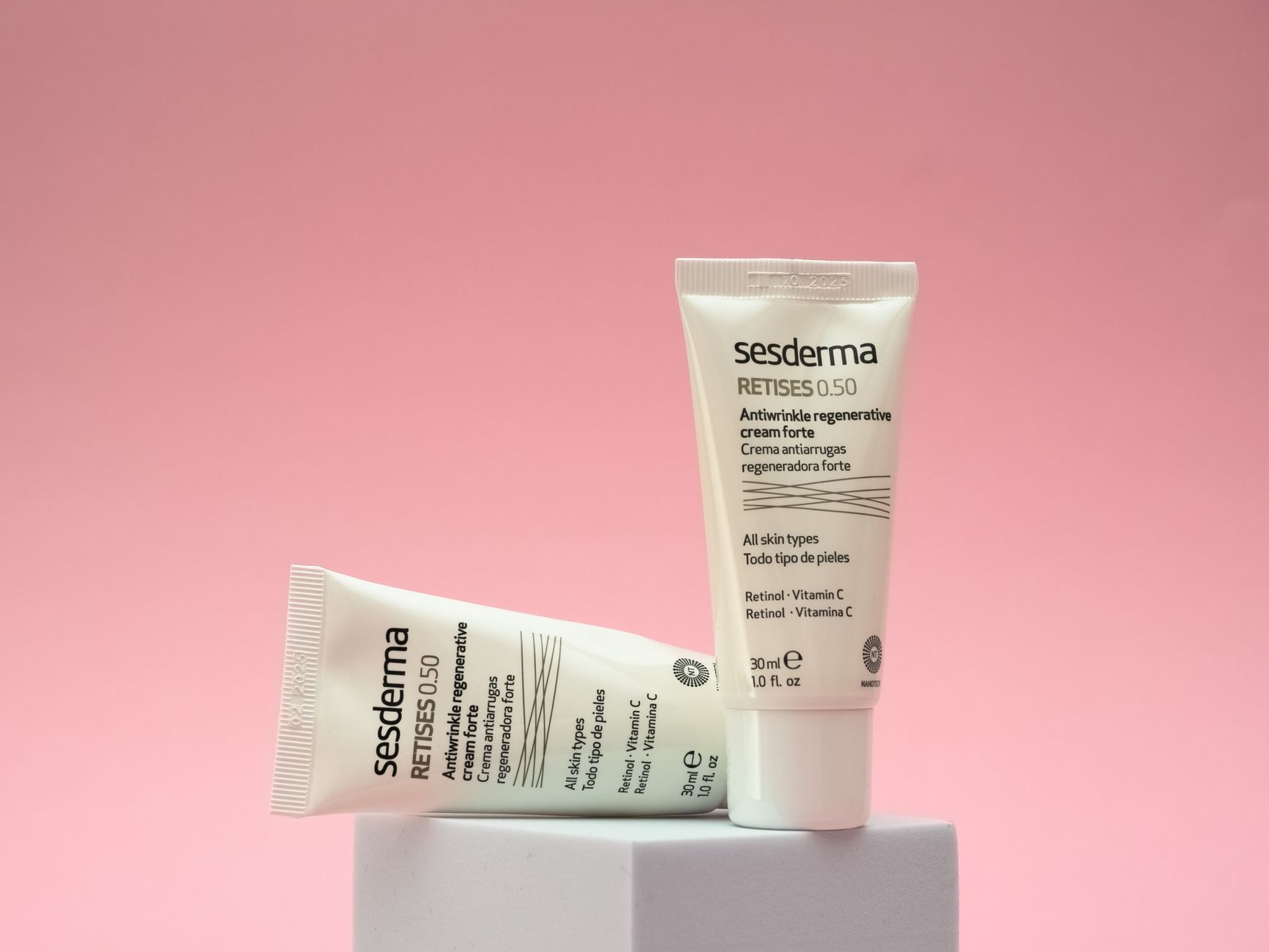
Yes, ceramides and retinol work well together in your skincare routine. This pairing is effective because ceramides protect and repair the skin barrier, mitigating potential retinol irritation and making the active ingredient more tolerable.
Combining these two allows you to harness retinol’s anti-aging and skin-renewing benefits while actively mitigating dryness, flaking, and irritation.
The Science Behind Why Ceramides and Retinol are a Power Duo
We’ll look at what each ingredient does for your skin to understand this pairing.
Retinol: The Skin Renegade
Retinol, a Vitamin A derivative, accelerates skin cell turnover. This process helps to:
- Reduce the appearance of fine lines and wrinkles
- Improve uneven skin tone and texture
- Minimize hyperpigmentation and dark spots
- Help prevent breakouts
Increased cell turnover can come with an adjustment period. Many experience common side effects like dryness, peeling, redness, tightness, and increased sensitivity. These symptoms often signal a compromised skin barrier, not an allergic reaction to retinol. Retinol temporarily outpaces your skin’s natural lipid production, leading to trans-epidermal water loss (TEWL) and a weakened protective barrier.
Ceramides: The Skin’s Natural Shield
Ceramides are fatty molecules, or lipids, found naturally in your skin’s outermost layer, the stratum corneum. They make up over 50% of your skin barrier, acting like “cement” between skin cells, holding everything together. Their primary roles include:
- Locking in hydration and preventing moisture loss
- Protecting against environmental aggressors and irritants
- Supporting barrier repair and maintaining skin resilience
Aging, sun damage, harsh cleansers, and even actives like retinol can deplete natural ceramide levels, leading to dryness, roughness, and irritation.
The Synergistic Effect
Introducing ceramides into your retinol routine provides skin with the essential building blocks it needs to repair and strengthen its barrier. Ceramides replenish lipids retinol can temporarily deplete, directly counteracting the dryness, sensitivity, and irritation commonly associated with retinol use. This pairing leads to:
- Reduced irritation and discomfort
- Improved skin barrier function, allowing your skin to tolerate retinol more effectively
- Enhanced hydration by locking in moisture and reducing water loss
- Better long-term results because a healthy, comfortable skin barrier allows for consistent retinol use.
When the Answer Changes: Tailoring Your Routine
Related reading: Hyaluronic Acid Skincare Guide: How to Use It, Layer It, and Pick the Right Formula
How you combine ceramides and retinol depends on your skin type and retinol experience.
- For Sensitive Skin or Retinol Beginners (The “Sandwich Method”): If your skin is sensitive or you’re new to retinol, the “sandwich method” is an excellent approach. Apply a layer of ceramide-rich moisturizer first, allow it to absorb, then apply your pea-sized amount of retinol. Finally, seal it with another layer of ceramide moisturizer. This method helps buffer the retinol, reducing its direct impact and minimizing potential irritation.
- For Experienced Retinol Users: If your skin tolerates retinol well, cleanse your face, apply your retinol serum, let it fully absorb (around 15 minutes is often recommended for dry skin penetration), then follow with a ceramide moisturizer.
Consistency is key for retinol results, and ceramides help make that possible by keeping skin comfortable.
How to Layer Ceramides and Retinol Safely
Here’s how to incorporate ceramides and retinol into your evening routine for optimal results and minimal irritation:
- Cleanse Gently: Cleanse gently with a mild, hydrating cleanser to remove makeup, dirt, and impurities without stripping skin.
- Dry Thoroughly: Pat skin completely dry. Applying retinol to damp skin can increase penetration and lead to more irritation. Wait a full 15 minutes after cleansing to ensure skin is perfectly dry.
- Apply Ceramides (Optional, for Sensitive Skin/Sandwich Method): For the sandwich method, apply a thin layer of your ceramide-rich moisturizer here. Allow it to absorb for about 60 seconds.
- Apply Retinol: Apply a pea-sized amount of your retinol product onto fingertips. Gently apply it evenly over your face, avoiding the immediate eye area.
- Wait for Absorption: Let the retinol fully absorb for a few minutes (5-10 minutes, or up to 15 minutes if preferred). This ensures the retinol works effectively before other layers are applied.
- Seal with Ceramides: Seal with a generous layer of your ceramide-rich moisturizer. This step is crucial for replenishing lipids, locking in moisture, and supporting your skin barrier overnight.
Frequency: Start retinol 2-3 nights a week, gradually increasing frequency as skin builds tolerance. Use your ceramide moisturizer every night, even on non-retinol nights, to continuously support your skin barrier.
Important Daily Reminder: Always apply a broad-spectrum SPF 30 or higher every morning. Retinol increases sun sensitivity, making sun protection non-negotiable.
Our Top Picks for Ceramide-Rich Moisturizers
Related reading: Retinol for Beginners: The Complete Guide to Starting Safely
To seamlessly integrate ceramides into your retinol routine, we recommend these barrier-supporting options:
-
CeraVe Moisturizing Cream: This rich, non-greasy cream is a dermatologist favorite. It contains three essential ceramides (1, 3, 6-II), hyaluronic acid, petrolatum, and dimethicone, restoring and maintaining the skin’s natural protective barrier while providing 24-hour hydration. It’s fragrance-free, non-comedogenic, and suitable for normal to very dry and sensitive skin. Expect to pay around $15-$20 for a 16 oz jar.
-
CeraVe PM Facial Moisturizing Lotion: Designed for nighttime, this lightweight, oil-free lotion delivers 48-hour hydration and helps repair the skin barrier. It features three essential ceramides (1, 3, 6-II), hyaluronic acid, and niacinamide, which helps calm skin. Its MVE Technology ensures a steady release of moisturizing ingredients throughout the night. This non-comedogenic, fragrance-free formula is an excellent choice for sealing in your retinol. Expect to find it for approximately $15-$17 for 3 oz.
Frequently Asked Questions
How long after applying retinol should I apply moisturizer?
We recommend waiting a few minutes (around 5-10) for retinol to fully absorb before applying your ceramide moisturizer. For very sensitive skin or new retinol users, waiting up to 15 minutes after cleansing and before retinol application, then applying moisturizer immediately after retinol, can further reduce irritation.
Can I use ceramides every night with retinol?
Yes, you can and should use a ceramide-rich moisturizer every night, including nights with retinol and nights without. Consistent ceramide use helps maintain a strong, healthy skin barrier. This is crucial for tolerating retinol and preventing dryness and irritation.
What are the signs of retinol irritation?
Typical retinol irritation signs include dryness, flaking, redness, tightness, a slight burning or itching, and increased sensitivity. If you experience persistent burning, angry redness, swelling, or discomfort that interferes with daily life, pause retinol use and focus on barrier repair.
Related Articles
- Peptides in Skincare: What They Do and Which Products Are Worth It for Mature Skin 2026
- Salicylic Acid Guide: How to Use It for Acne Without Over-Drying
- How to Fade Dark Spots: The Ingredients That Actually Work for Mature Skin
- Niacinamide Benefits for Skin: The Complete Ingredient Guide for 2026
Where to Buy

💬 Join the Conversation
Have thoughts on this article? We'd love to hear from you.